
Pain Management for Out-of-Hospital Birth: Natural Comfort Options

Photo by Natalie Broders
The benefits of low intervention care for pregnancy, labor, and birth range from better health outcomes for baby and the birthing person, to reports of a more physiological normal birth experience. This low intervention care usually also means that labors go unmedicated, meaning no pain medications are used.
While you may have chosen to give birth in an out-of-hospital setting in hopes to achieve a low intervention birth, the question of pain relief still lingers. Epidurals may be a common form of pain relief in hospitals, but they are not the only way to experience a more comfortable labor and birth. There are a plethora of other comfort measures that can help ease pain in labor.
Before we dive into comfort techniques that are helpful with pain management in unmedicated births, let's first talk a little about pain.
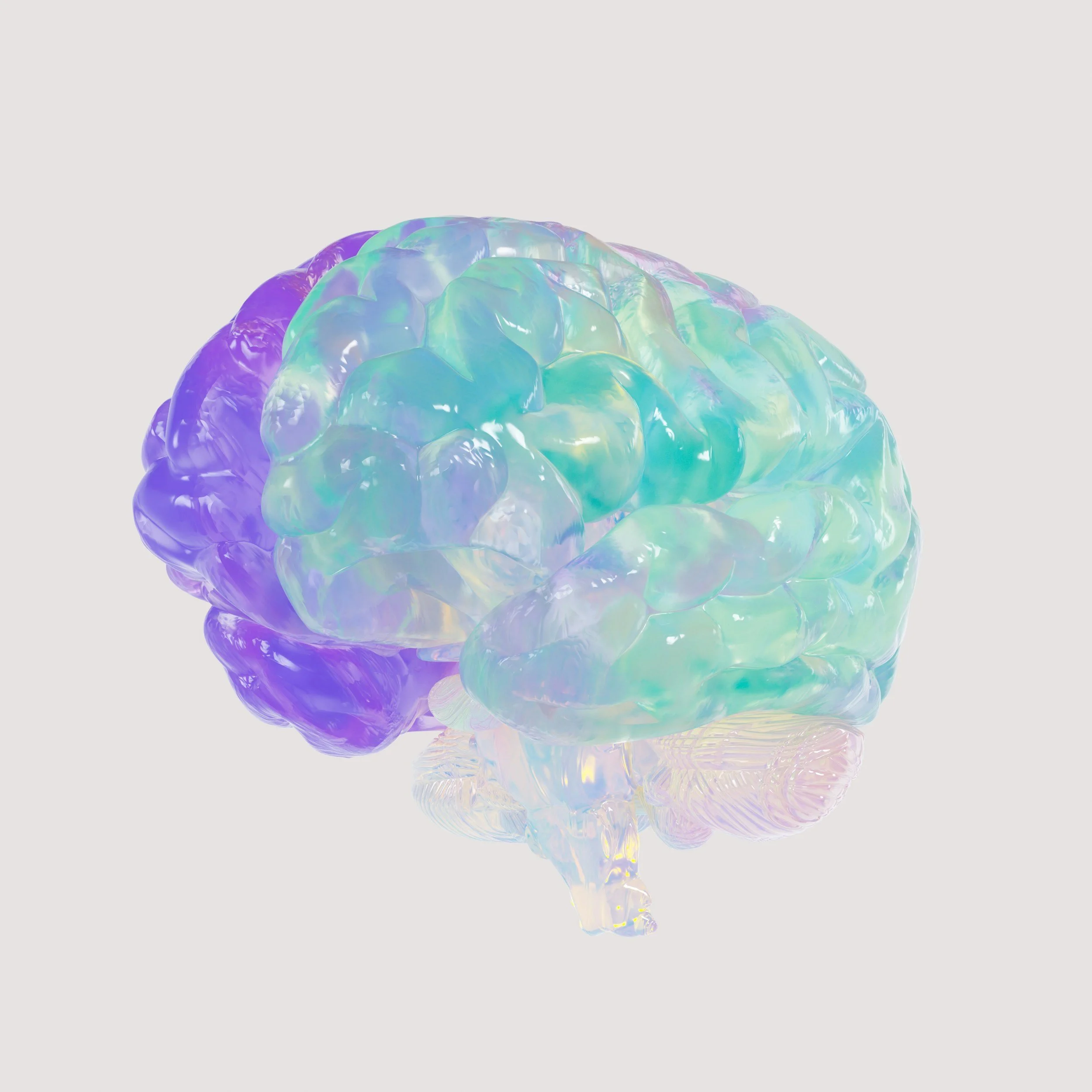
Pain receptors are present throughout the body, both outside and within. These receptors send electrical messages through your spinal cord to the brain. You only become aware of pain after your brain receives and interprets these electrical messages. In labor, as in other times you experience pain, you can disrupt these signals by introducing positive stimuli. The gate control theory of pain suggests that we can disrupt the signal from our pain receptors by introducing positive/non-painful stimuli. An example of this is rubbing our elbow after hitting it on something. Our bodies instinctively know that by adding comfort touches, like rubbing, stoking, heat or cold, we can reduce the amount of pain we feel.

Pain during labor primarily arises from uterine contractions as the body prepares for childbirth. Wondering what uterine contractions feel like? You can read more about them here.
Contractions help move baby down the birth canal and can cause discomfort in several areas, including the uterus, cervix, and pelvis. Pain can show up as cramping, tightening, aching, and intense pressure. Understanding the causes of pain during labor can help expectant parents prepare for childbirth. Taking classes that discuss the mechanisms of birth and allow you to practice comfort measures is a wonderful way to help prepare yourself.
Sign up for a class at Andaluz today!
Now, let’s discuss pain relief options in an out-of-hospital birth.
Nitrous Oxide
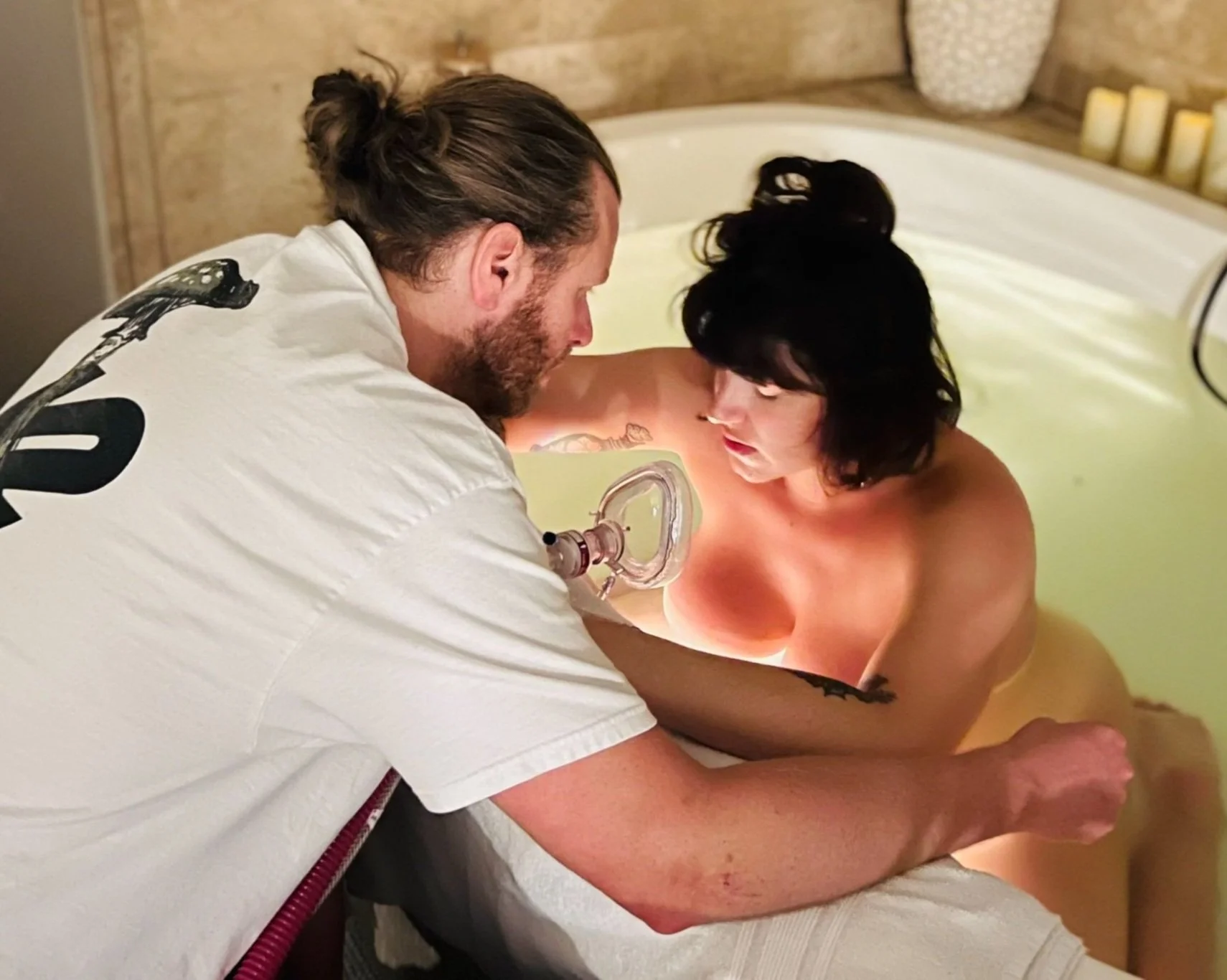
Similar to most hospital settings, Andaluz has the ability to provide nitrous oxide for pain relief. You may have already utilized the benefits of nitrous oxide if you have had any dental work with laughing gas. It is mixed with oxygen and inhaled, providing a sense of relaxation and control during contractions. It does not eliminate the pain, but helps dull it. It is less invasive than an epidural, allows for movement, and is safe for both baby and the birthing person.
You can read more about the use of nitrous oxide in labor here.
Breathing Techniques
Breathing techniques in labor can be super effective and there are a few different approaches. Focusing on your breathing can help relieve tension, distract your mind, and keep your body and baby oxygenated.
Deep, slow, belly breathing. Taking deep breaths, slowly in through the nose, holding, and then exhaling slowly through the mouth can trigger a state of relaxation and can also distract your brain by tasking it to pay attention to the slowness and fullness of each breath.
Cleansing breath. A cleansing breath is essentially the same thing as a deep, slow, belly breath but you are putting more emphasis on fully exhaling all the air in your lungs. We also suggest taking a cleansing breath in between each contraction to help relieve any leftover tension from lingering during your resting time.
Visual breathing. Visual breathing is focusing on an image as you inhale and exhale. Imagine your lungs filling with air like a flower blooms. Or imagining your breath is like waves crashing on the beach.
Movement and Positioning

Freedom to move is essential during labor and birth. Changing positions frequently can help reduce discomfort, facilitate fetal descent, and promote a sense of control. Listening to your body and allowing it to sway, rock, kneel, and open in the way it desires can help you experience more comfort and relaxation with each surge. Utilizing birth balls, birth stools, peanut balls, and a birth sling are all great ways to encourage position changes and variation.
Hydrotherapy
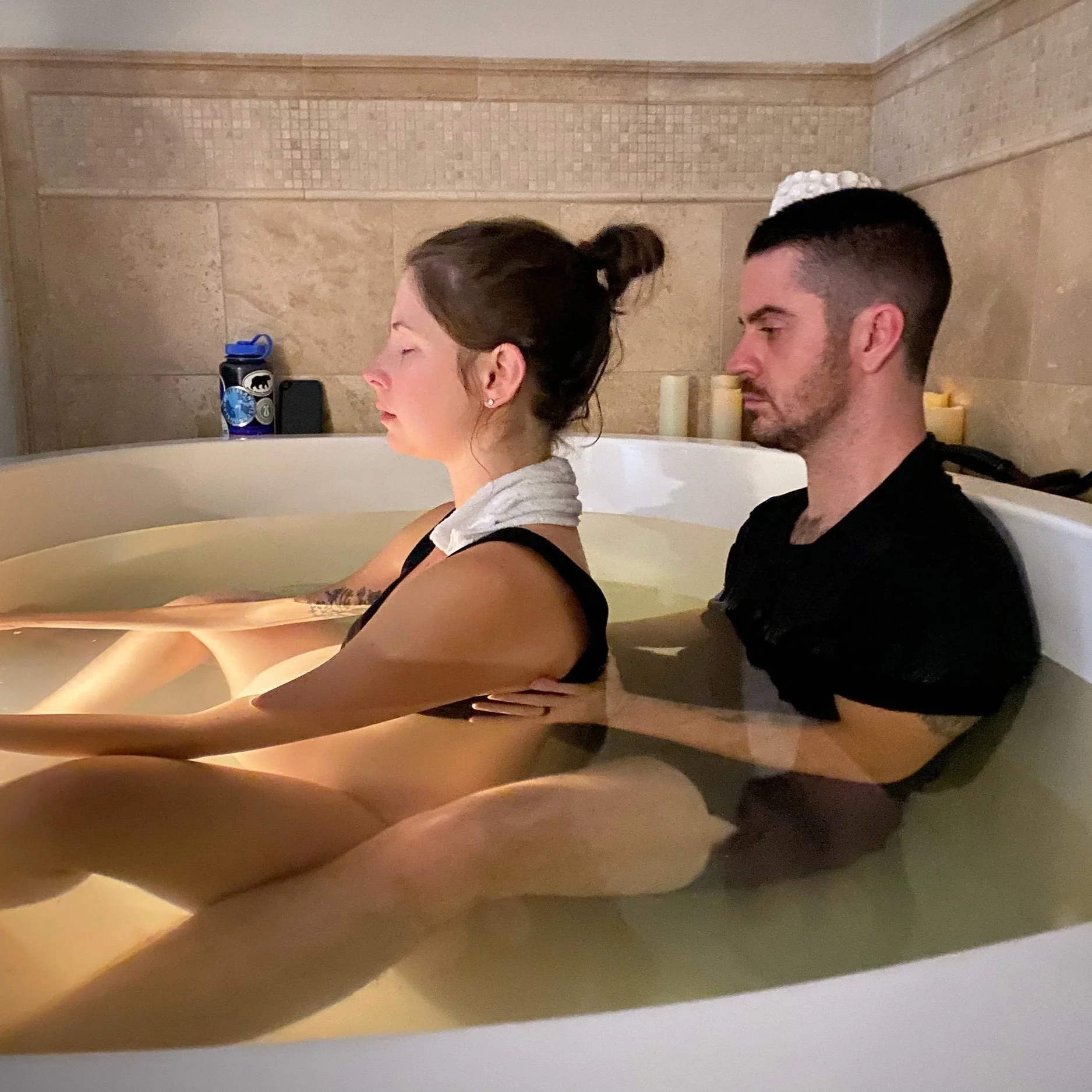
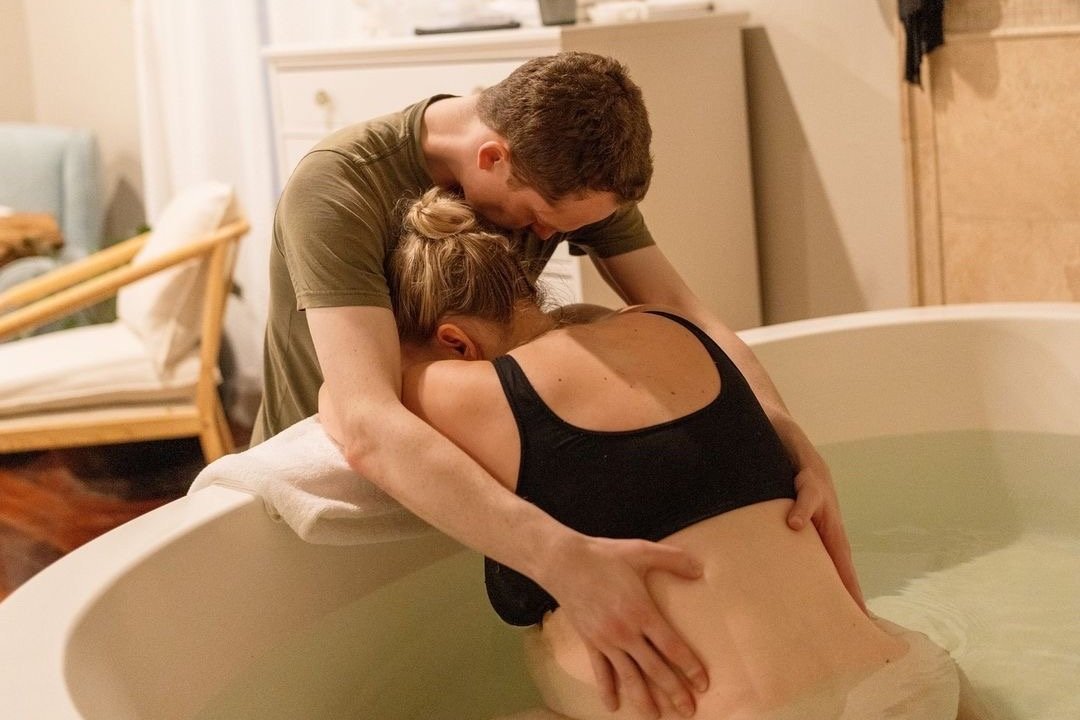
Warm water in a shower or birth tub (have you seen our birth tubs?) can provide significant pain relief, muscle relaxation, and a sense of weightlessness. People who gave birth in water report experiencing less anxiety and fear and having more control over their birth experience. Hydrotherapy can increase endorphin release and decrease pain perception.
You can read more about the benefits of waterbirth here.

Photo by Natalie Broders
Sterile Water Injections
Sterile water injections involve injecting clean, sterile water just beneath the skin in the lower back area. It is a non-pharmacological pain relief option during labor, particularly effective for lower back pain. It can provide relief for up to two hours without affecting labor progress.
Massage, Touch & Counterpressure
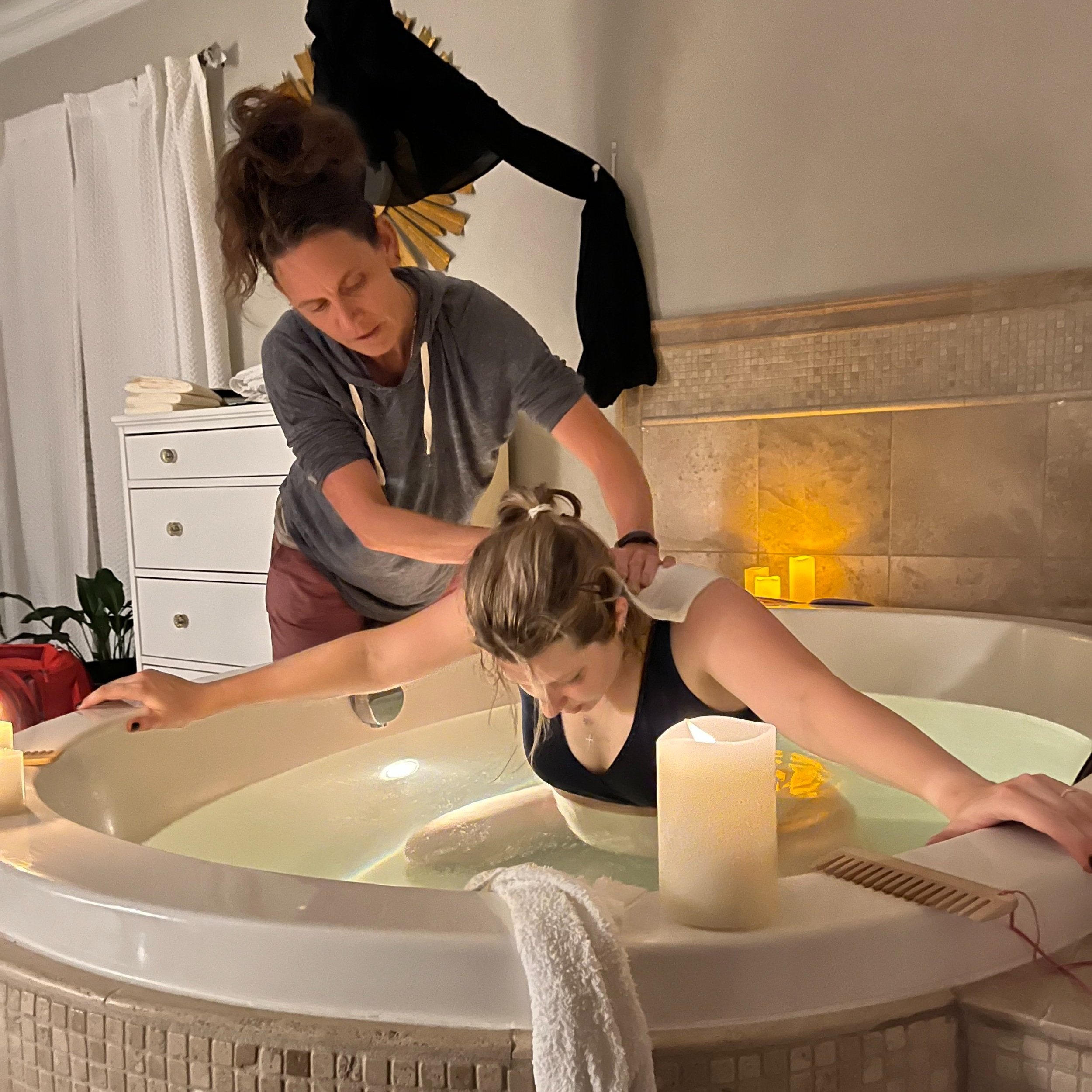
Gentle massage from a support person, particularly on the back, shoulders, or legs, can alleviate tension. Firm massage can help relieve stiff shoulders and provide relief from back pain and muscle cramps. Counterpressure applied to the lower back can help ease back labor pain as the baby descends into the pelvis.
TENS unit
A Transcutaneous Electrical Nerve Stimulation unit delivers mild electrical impulses to the skin, which can help block pain signals and stimulate endorphin release. In labor, TENS is most frequently placed on the lower back. The birthing person or a support person can adjust the intensity of the TENS unit as needed during contractions. There are no lingering effects, and it can be stopped at any time.
Heat & Cold therapy
Applying warm compresses to the back or abdomen, or cold packs to areas of discomfort, can offer relief. When waves of nausea come through, a cold cloth on the forehead, back of neck, or on top of your chest can feel very soothing.
Acupressure
Applying pressure to specific points on the body may help reduce pain and promote relaxation. This can be done by a partner or a trained professional. A tool called a birthing comb can be used by squeezing the comb into your palm or finger joints to apply pressure and distract your mind during a contraction. When the comb is applied to pressure points it can help reduce stress and produce relaxation.
Aromatherapy
Certain essential oils diffused or applied topically can help promote relaxation and reduce discomfort. When smells are familiar it can also be comforting and help us achieve a sense of relaxation.
Relaxation Techniques
You don’t need to be an experienced meditator to feel the benefits of meditation during labor. Anything that helps your mind escape the intensity of labor pain can be beneficial for pain relief. Using guided imagery or a guided meditative script is a great resource. There are many different scripts to choose from. Choosing something you like prior to labor starting is key. Practicing during pregnancy can also be very beneficial.
